
What Is GEO (Generative Engine Optimization)? A Beginner’s Guide for Businesses

Over the past year, businesses have been introduced to a growing list of new terms associated with artificial intelligence and digital marketing. Among them, Generative Engine Optimization, commonly referred to as GEO, has emerged as one of the most discussed concepts. As platforms such as ChatGPT, Google’s AI Overviews, Perplexity, and other AI-powered experiences begin influencing how users discover information online, many business owners are understandably questioning whether traditional approaches to search visibility are still enough.
The concern is understandable. For decades, search engine optimization revolved around a relatively straightforward objective: helping websites rank prominently within search engine results pages. Businesses invested in content creation, technical improvements, keyword research, and link-building strategies to attract clicks and drive traffic. However, AI-generated responses are beginning to reshape how information is presented. Instead of simply displaying a list of websites, search experiences are increasingly designed to provide direct answers, recommendations, and summaries.
This shift has led to growing conversations around GEO. But despite the attention it has received, many businesses remain uncertain about what it actually means. Is GEO replacing SEO? Do organizations need to rethink their digital strategies entirely? Or is it simply a new label for principles that have existed for years?
Understanding the answers to these questions can help businesses respond with clarity rather than panic.
Why Everyone Is Suddenly Talking About GEO
The rise of Generative Engine Optimization is closely linked to changes in how people search for information. Users are becoming increasingly comfortable interacting with AI tools in a conversational way. Rather than entering short keyword phrases, they are asking detailed questions and expecting immediate, context-rich responses.
For example, a user who once searched for “best accounting software” may now ask, “What accounting software would suit a small manufacturing business that plans to expand over the next two years?” Instead of returning ten blue links, AI-powered systems attempt to generate a direct response by drawing information from multiple sources.
Google’s introduction of AI Overviews has accelerated these discussions. At the same time, platforms such as ChatGPT and Perplexity have demonstrated that users are willing to explore new ways of discovering information. While traditional search continues to play a significant role, businesses are beginning to recognize that visibility may depend on more than rankings alone.
This changing environment has created a sense of urgency. Many organizations fear that if AI systems provide answers directly, website traffic could decline. Although these concerns are not entirely unfounded, they often lead to a misunderstanding of what Generative Engine Optimization is intended to achieve.
What Is Generative Engine Optimization (GEO)?
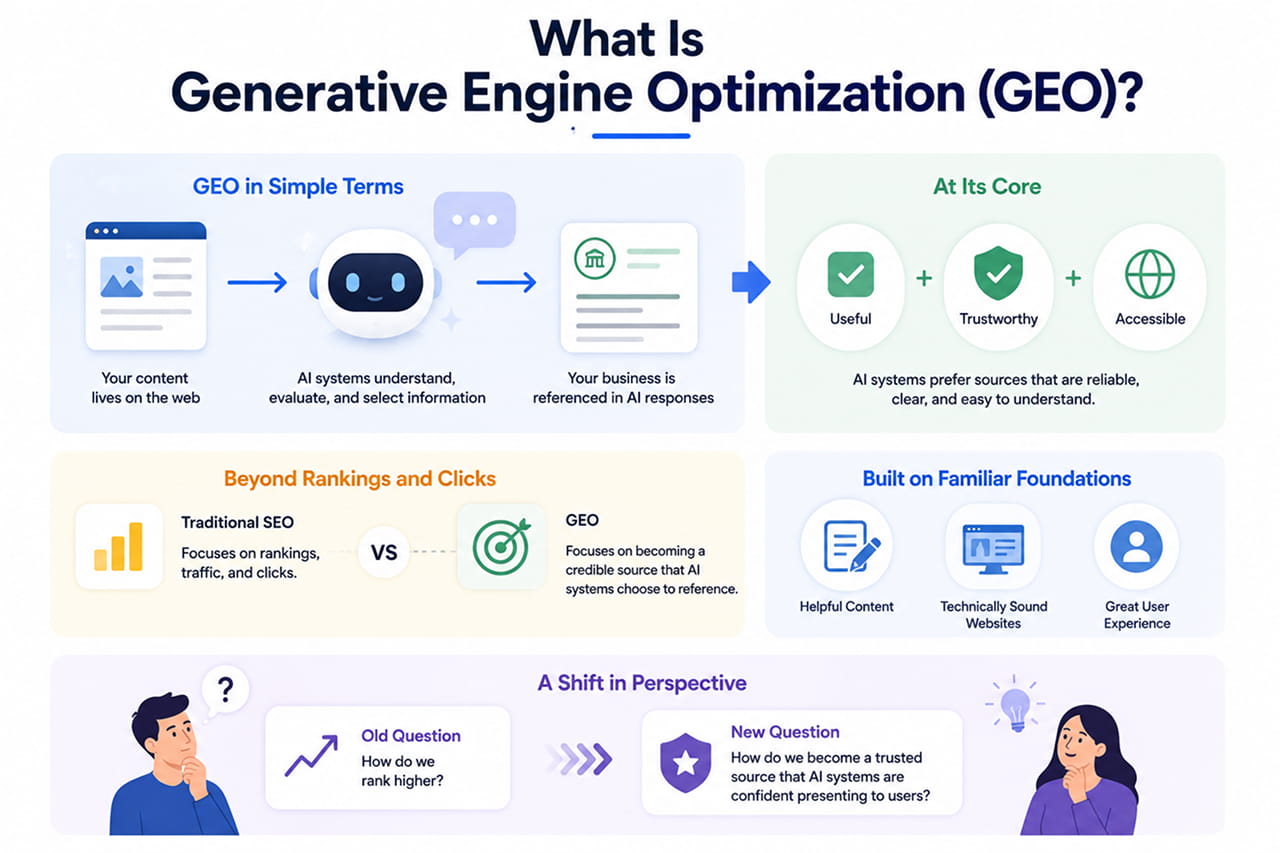
Generative Engine Optimization refers to the process of improving the likelihood that a business, brand, product, or piece of content is referenced or surfaced within AI-generated responses. Rather than focusing exclusively on search rankings, GEO encourages businesses to think about how their information is understood, evaluated, and incorporated into generative experiences.
At its core, GEO is about making content useful, trustworthy, and accessible.
Unlike traditional SEO strategies that often measure success through rankings and click-through rates, GEO considers whether a business is becoming a credible source of information. If an AI system attempts to answer a user’s question, it is more likely to reference content that demonstrates expertise, clarity, and relevance.
This does not mean businesses should abandon existing SEO strategies. In fact, many of the activities associated with GEO closely resemble practices that have long been encouraged by search engines: creating helpful content, maintaining technically sound websites, and prioritizing user experience.
The difference lies in perspective. Instead of asking, “How do we rank higher?”, businesses are increasingly asking, “How do we become a trusted source that AI systems are confident presenting to users?”
GEO vs SEO: Understanding the Difference
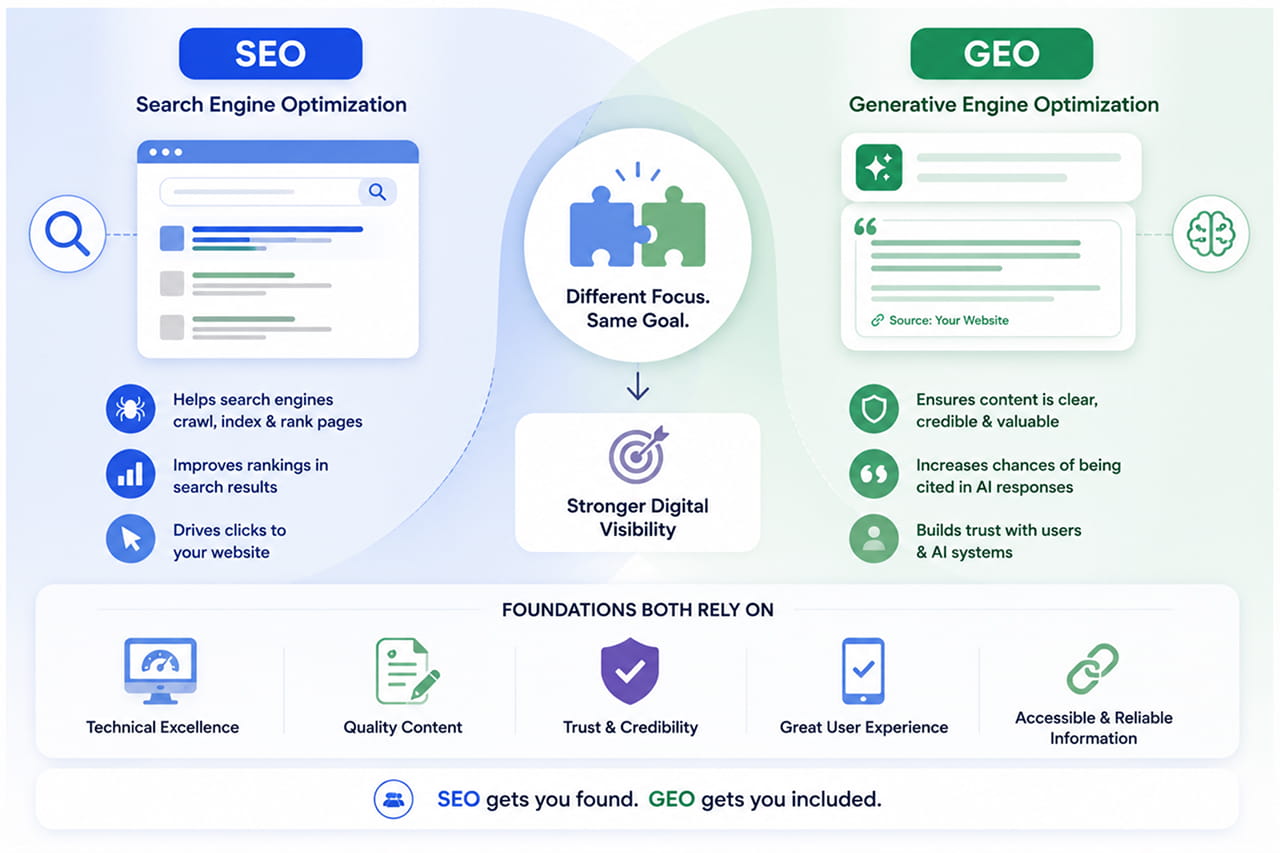
One of the biggest misconceptions surrounding Generative Engine Optimization is that it represents the death of SEO. Headlines suggesting that traditional optimization is obsolete have contributed to unnecessary confusion, particularly among businesses that have spent years investing in their digital presence.
In reality, Generative Engine Optimization and SEO are more complementary than contradictory.
SEO focuses on helping search engines crawl, index, and rank webpages effectively. Generative Engine Optimization focuses on ensuring that the information contained within those webpages is clear, credible, and valuable enough to be incorporated into AI-generated responses. Both approaches ultimately reward organizations that prioritize quality.
Technical excellence continues to matter because AI systems still depend on accessible information. Content quality remains important because users and machines alike seek accurate answers. Strong website experiences continue to influence engagement and trust, regardless of how a visitor arrives.
Rather than viewing Generative Engine Optimization and SEO as competing strategies, businesses should understand them as different lenses through which digital visibility can be strengthened.
Does Generative Engine Optimization Mean Businesses Need to Start Over?
The short answer is no.
Businesses do not need to discard years of SEO investment simply because a new acronym has entered the conversation. In many cases, organizations that have consistently followed best practices may already possess many of the foundations associated with Generative Engine Optimization.
Technical SEO, for example, remains essential. Search systems must still access, understand, and interpret website content accurately. Businesses investing in Technical SEO Services often improve crawlability, site architecture, structured data implementation, and overall accessibility—all factors that contribute to stronger digital foundations.
Similarly, organizations conducting regular SEO Audits are better equipped to identify issues affecting both traditional visibility and emerging AI experiences. Broken pages, duplicate content, slow-loading resources, and poorly structured information can undermine user experiences regardless of the discovery channel involved.
The emergence of Generative Engine Optimization should therefore be viewed as an evolution rather than a revolution. Businesses are not starting from zero. They are building upon practices that continue to deliver value.
How Businesses Can Prepare for GEO Today
Although the future of generative search remains uncertain, there are practical steps businesses can take to strengthen their visibility.
The first involves focusing on original, experience-driven content. Generic articles designed solely to target keywords may struggle to establish authority. Businesses should instead share insights, answer genuine customer questions, and provide information that reflects their expertise.
Improving website experiences should also remain a priority. Organizations investing in Website Development Services often discover that clearer navigation, stronger information architecture, and better usability improve engagement while supporting discoverability across multiple channels.
Ongoing Website Maintenance Services are equally important. As technologies evolve, businesses must ensure their websites remain secure, current, and technically reliable. Regular updates, performance optimization, and monitoring help create the consistency that both users and search systems value.
Finally, businesses should focus on demonstrating credibility. Customer testimonials, author expertise, transparent policies, and accurate business information all contribute to stronger trust signals that can influence how information is perceived.
Why Trust May Become the Most Important Ranking Factor
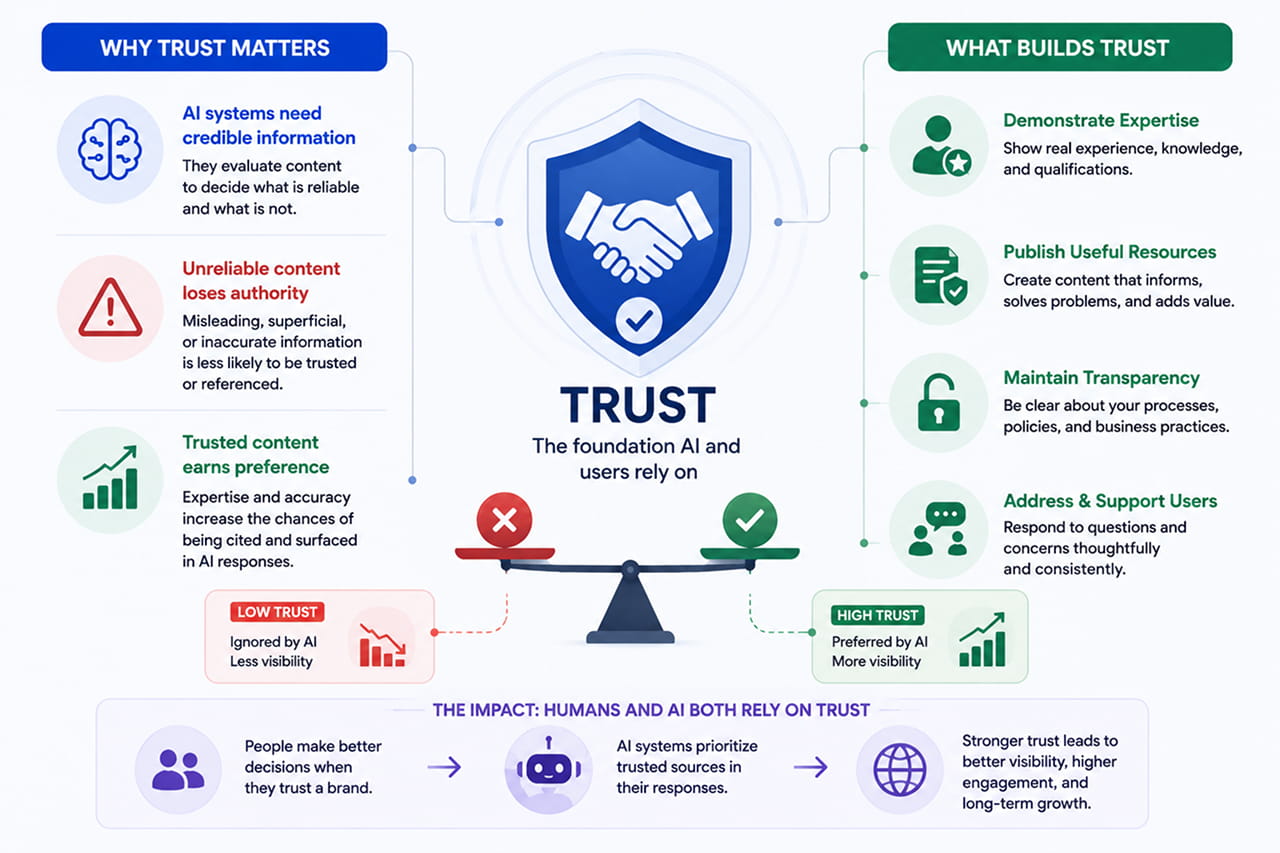
If there is one theme consistently emerging from discussions around Generative Engine Optimization, it is the growing importance of trust.
AI systems aim to provide users with helpful information. To do so effectively, they must distinguish between content that is credible and content that is unreliable. Businesses that publish misleading, superficial, or inaccurate information may find it increasingly difficult to establish authority.
Conversely, organizations that consistently demonstrate expertise are likely to strengthen their reputation over time. Publishing useful resources, maintaining transparency, and addressing customer concerns thoughtfully can all contribute to stronger perceptions of trustworthiness.
Trust has always influenced human decision-making. The difference today is that it may also influence how digital systems interpret and prioritize information.
What Should Indian Businesses Focus on Right Now?
For Indian businesses navigating these developments, the temptation may be to chase every emerging trend. However, reacting impulsively often leads to fragmented strategies and unnecessary complexity.
A more sustainable approach involves focusing on fundamentals.
Businesses should continue investing in SEO Services that improve visibility through technical excellence and helpful content. They should strengthen their websites through thoughtful design and development practices. They should prioritize customer experience and ensure that the information they publish genuinely addresses user needs.
India’s digital landscape continues to evolve rapidly, and AI-driven experiences will undoubtedly play a growing role in how people discover businesses online. Yet organizations that remain committed to clarity, credibility, and consistency are likely to adapt more effectively than those pursuing quick fixes.
The Future of Search Is Changing, but the Fundamentals Remain
Generative Engine Optimization may be one of the newest additions to the digital marketing vocabulary, but its underlying message is surprisingly familiar. Businesses that communicate clearly, demonstrate expertise, and maintain trustworthy digital experiences have always been better positioned to succeed online.
The rise of AI-powered discovery does not signal the end of SEO. Instead, it highlights the importance of building digital foundations capable of adapting to change. Search experiences may continue evolving, but users will always seek accurate information, reliable businesses, and meaningful experiences.
Rather than viewing Generative Engine Optimization as a reason to abandon proven strategies, businesses should treat it as an opportunity to strengthen what already matters most.
Conclusion
Generative Engine Optimization represents an important shift in how businesses think about visibility in an increasingly AI-driven world. While the technologies influencing search experiences may evolve, the principles underpinning long-term success remain remarkably consistent.
Businesses that invest in technically strong websites, create genuinely useful content, demonstrate expertise, and prioritize customer trust are unlikely to become irrelevant simply because search interfaces change. In fact, these organizations may be better positioned to thrive as generative experiences mature.
For Indian businesses, the goal should not be to chase every new trend. It should be to build digital experiences worthy of being discovered, trusted, and recommended—whether by people or by the technologies designed to help them find answers.
Want to strengthen your digital presence as search continues to evolve? Whether you’re improving your SEO foundations, enhancing your website experience, or preparing for emerging AI-driven search experiences, our team can help. Reach out through our contact form and we’ll respond promptly with practical guidance tailored to your business goals and growth ambitions.


 +91 8277203000
