
How Indian Online Stores Should Prepare for AI Powered Shopping

The next major shift in ecommerce may not be driven by discounts, marketplaces, or social media trends. It may be driven by the way consumers search, discover, and buy products through AI powered shopping experiences.
For more than a decade, Indian ecommerce businesses have optimised their strategies around familiar touchpoints. They invested in paid campaigns, competed for search rankings, improved marketplace visibility, and built social media audiences.
Businesses investing in robust ecommerce website development strategies often find that richer product experiences improve both discoverability and conversions as customer expectations evolve.
Customers typically moved through a predictable journey: search for a product, compare options, visit multiple websites, and eventually make a purchase.
That journey is beginning to evolve.
At Google I/O, Google introduced new commerce initiatives designed to support more conversational and personalised shopping experiences. Rather than relying solely on traditional keyword searches, shoppers can now ask detailed questions, compare products through AI generated recommendations, and receive suggestions tailored to their preferences. According to Google’s announcements, these experiences aim to help consumers move more efficiently from discovery to decision-making.
Google’s latest commerce initiatives suggest that conversational shopping experiences will increasingly shape how consumers discover and evaluate products.
For Indian online stores, this development raises an important question. If AI increasingly influences what customers see and consider, how should businesses prepare?
The answer does not lie in abandoning existing digital strategies. Instead, it requires strengthening the fundamentals that already drive trust, usability, and conversions.
Why This Matters for Indian Ecommerce Businesses
India’s ecommerce sector continues to grow at an impressive pace. According to the India Brand Equity Foundation (IBEF), the country’s ecommerce market is projected to reach US$1 trillion by 2030, supported by rising internet penetration, smartphone adoption, and evolving consumer expectations.
As competition intensifies, acquiring customers is becoming increasingly expensive. Businesses can no longer rely solely on increasing advertising budgets to drive growth. They must ensure that once consumers discover their products, the experience that follows is informative, trustworthy, and frictionless.
Businesses that invest in comprehensive SEO services focused on technical excellence, content relevance, and user experience are likely to build stronger digital foundations for long-term growth.

AI powered shopping has the potential to reward businesses that communicate their products clearly.
Imagine a consumer searching for a festive outfit. Instead of typing “red kurti under ₹2,000,” they may ask an AI assistant:
“What are some lightweight festive kurtis suitable for summer weddings that can be delivered before next weekend?”
The systems processing these requests require context. Product attributes, descriptions, reviews, availability, and website performance all contribute to whether products appear relevant.
This means that the quality of a business’s digital foundation may become just as important as its marketing spend.
Product Pages Are Becoming Strategic Assets
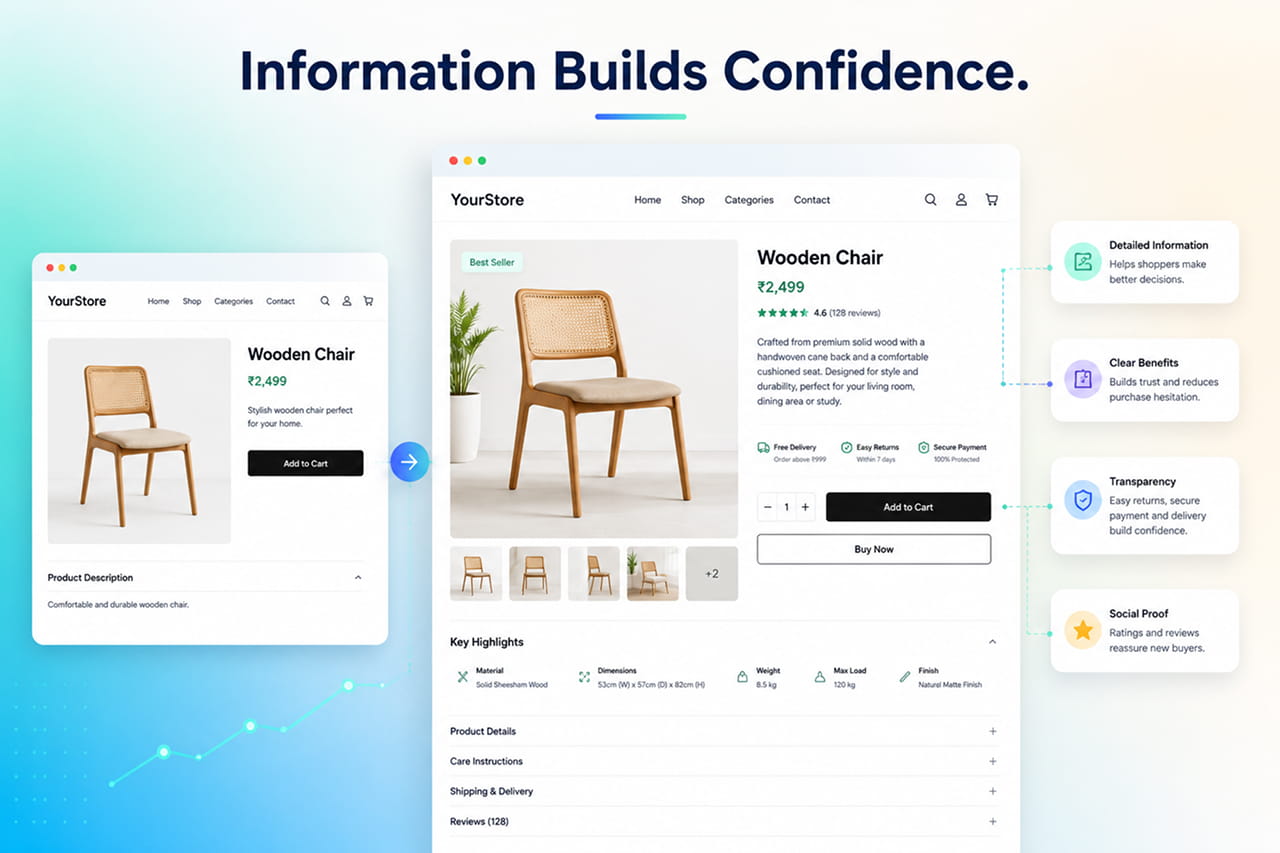
Many businesses still treat product pages as online catalogues. They upload a few images, add a short description, list the price, and move on.
However, AI powered shopping experiences rely heavily on accurate information.
A skincare brand, for example, benefits from describing ingredients, skin types, usage instructions, and expected outcomes rather than repeating generic keywords. Likewise, a furniture retailer that provides detailed specifications, dimensions, assembly guidance, and lifestyle imagery makes it easier for both shoppers and intelligent systems to understand what is being sold.
This is where businesses should rethink their approach to ecommerce website development.
Rather than designing product pages solely for aesthetics, retailers should focus on creating pages that answer customer questions before they are asked. Businesses investing in robust ecommerce website development strategies often find that better product experiences improve both discoverability and conversions.
The Technical Foundations Indian Retailers Cannot Ignore
The emergence of AI powered shopping does not eliminate the importance of traditional website best practices. In fact, it reinforces them.
Businesses should pay close attention to the following areas:
- Accurate product schema and structured data.
- Fast loading mobile experiences.
- Reliable inventory synchronisation.
- Secure checkout processes.
- Authentic customer reviews.
- Clear delivery and return policies.
Google has consistently emphasised the importance of creating people-first experiences. As AI driven interfaces become more sophisticated, businesses with organised and trustworthy information may be better positioned to benefit.
Retailers unsure about their current performance may benefit from conducting comprehensive SEO audits to identify technical gaps, crawl issues, and opportunities for improvement before these weaknesses begin affecting visibility and customer experience.
Mobile Experiences Still Influence Purchase Decisions
India remains one of the world’s largest mobile first markets. Consumers frequently browse products, compare prices, and complete purchases directly from their smartphones.
Yet many online stores continue to struggle with slow loading pages, intrusive pop-ups, and complicated checkout journeys.
Google previously reported that 53 percent of mobile users abandon sites that take longer than three seconds to load. While consumer expectations continue to evolve, the message remains clear: speed matters.
Businesses investing in page speed and Core Web Vitals optimisation are not simply improving technical scores. They are reducing friction at critical moments within the customer journey.
A customer may discover your product through an AI generated recommendation, but if the website experience fails to meet expectations, that opportunity disappears quickly.
SEO Is Evolving Rather Than Disappearing
The rise of AI powered shopping has prompted some businesses to question whether SEO still matters.
It does.
What is changing is the nature of optimisation.
Keyword stuffing and superficial content offer diminishing returns. Businesses that invest in meaningful SEO services focused on content quality, technical excellence, and user experience are likely to build stronger digital foundations.
For ecommerce businesses, ecommerce SEO services remain essential in helping category pages, product pages, and informational content perform effectively.
The objective is no longer simply attracting traffic.
It is attracting the right audience and helping them move confidently towards conversion.
Smaller Indian Brands May Have an Opportunity
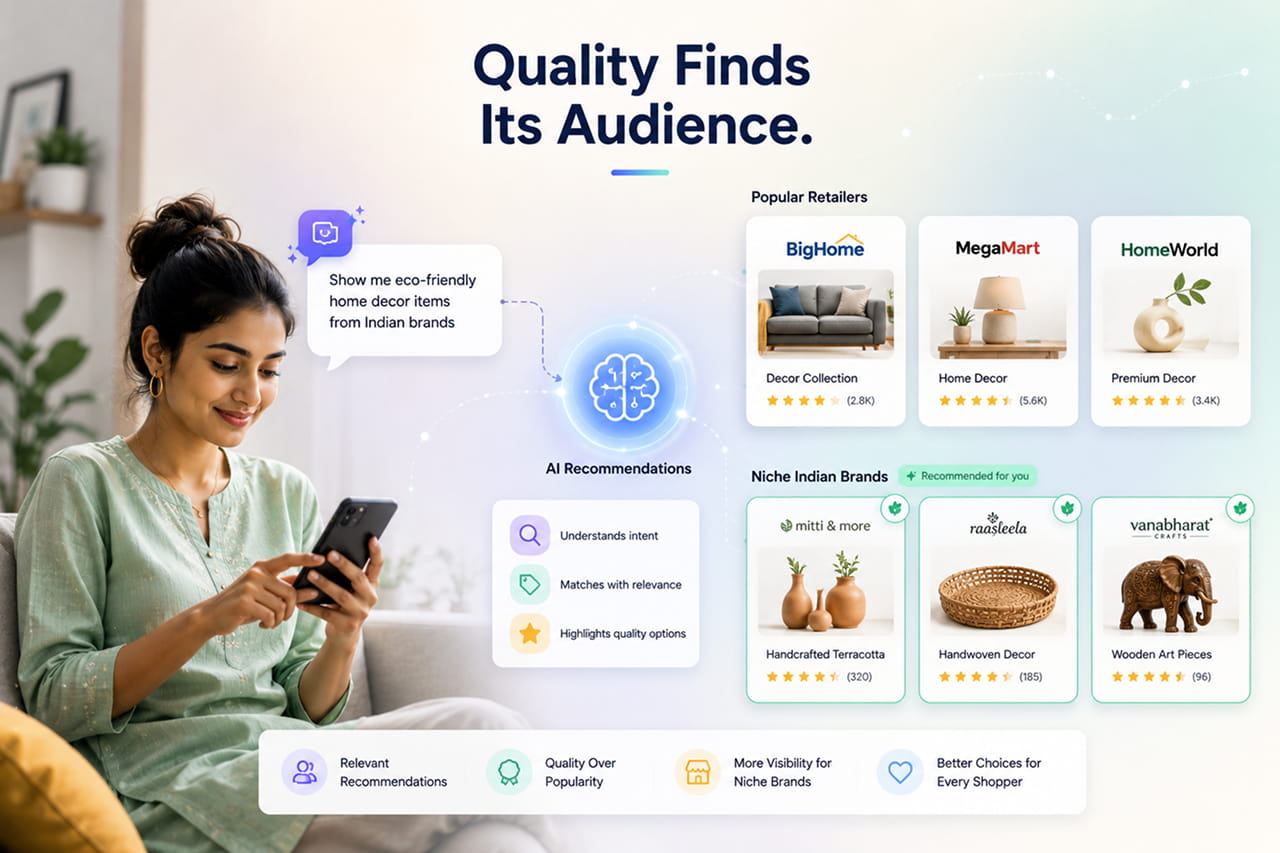
One of the most interesting aspects of AI powered shopping is its potential to highlight relevance over recognition.
Smaller businesses often struggle to compete against established brands with larger advertising budgets. However, recommendation systems designed to match products to specific needs may create opportunities for niche retailers.
Businesses selling regional handicrafts, Ayurvedic wellness products, sustainable fashion, artisanal foods, or specialised equipment could benefit if their product information is comprehensive and their websites deliver strong customer experiences.
This does not guarantee visibility.
But it may help level the playing field for businesses willing to invest in quality rather than relying exclusively on scale.
Preparing for the Future of Shopping
Indian online stores do not need to reinvent themselves overnight.
The businesses most likely to thrive will be those that focus on the fundamentals: creating reliable websites, maintaining accurate product information, improving mobile experiences, and communicating clearly with customers.
AI powered shopping may change how products are discovered, but it does not eliminate the role of trust.
Customers will continue to evaluate delivery commitments, return policies, authenticity, payment security, and overall experience before making purchasing decisions.
Discovery may evolve.
Great websites will still determine whether interest becomes action.
As ecommerce enters its next chapter, Indian businesses have an opportunity to prepare rather than react. Those that strengthen their digital foundations today may be better positioned to compete in whatever shopping experiences emerge tomorrow.
Want your online store to stay ready for the future of ecommerce? Reach out through our contact form and we’ll respond promptly. Whether you need ecommerce website development, SEO support, technical optimisation, or ongoing digital marketing guidance, our team can help you build an experience that keeps customers engaged and your business prepared for what’s next.


 +91 8277203000
