
Why 70% of Website Redesigns Fail to Improve Conversions

A website redesign is often viewed as a major opportunity for business growth.
Whether a website feels outdated, no longer reflects the brand, or struggles to meet modern customer expectations, redesigning it can seem like the obvious solution. Many businesses assume that a modern appearance, refreshed content, and improved functionality will naturally lead to more enquiries, better engagement, and increased sales.
Unfortunately, the reality is often very different.
Businesses invest significant time and resources into redesign projects only to discover that conversion rates remain unchanged—or worse, decline after launch. The website may look more professional, but the expected business results fail to materialize.
The reason is simple. A website redesign and a conversion strategy are not the same thing.
Many redesign projects focus heavily on aesthetics while overlooking the factors that actually influence customer behaviour. User experience, website performance, trust signals, messaging, search visibility, and customer intent often have a greater impact on conversions than visual design alone.
Businesses considering a redesign often benefit from partnering with experienced providers of website development services who understand how design, user experience, performance, and business objectives work together to drive measurable results.
A New Design Does Not Automatically Solve Business Problems
One of the biggest misconceptions surrounding a website redesign is the belief that a modern appearance will automatically improve performance.
While design plays an important role in shaping first impressions, customers rarely convert because a website looks attractive. They convert because the website helps them solve a problem, answer a question, or make a decision with confidence.
Many underperforming websites suffer from issues that a visual redesign alone cannot fix. Visitors may struggle to understand the value proposition, navigate the website efficiently, or identify the next step they should take.
When these underlying challenges remain unresolved, a redesign simply gives the same problems a new appearance.
The business impact of user experience is often underestimated. Google’s Core Web Vitals framework emphasizes loading performance, responsiveness, and visual stability as key indicators of user experience, reflecting the growing importance of website performance in both search visibility and customer satisfaction.
Successful redesign projects begin by identifying the factors preventing conversions before design decisions are made.
Businesses Redesign for Themselves Instead of Their Customers
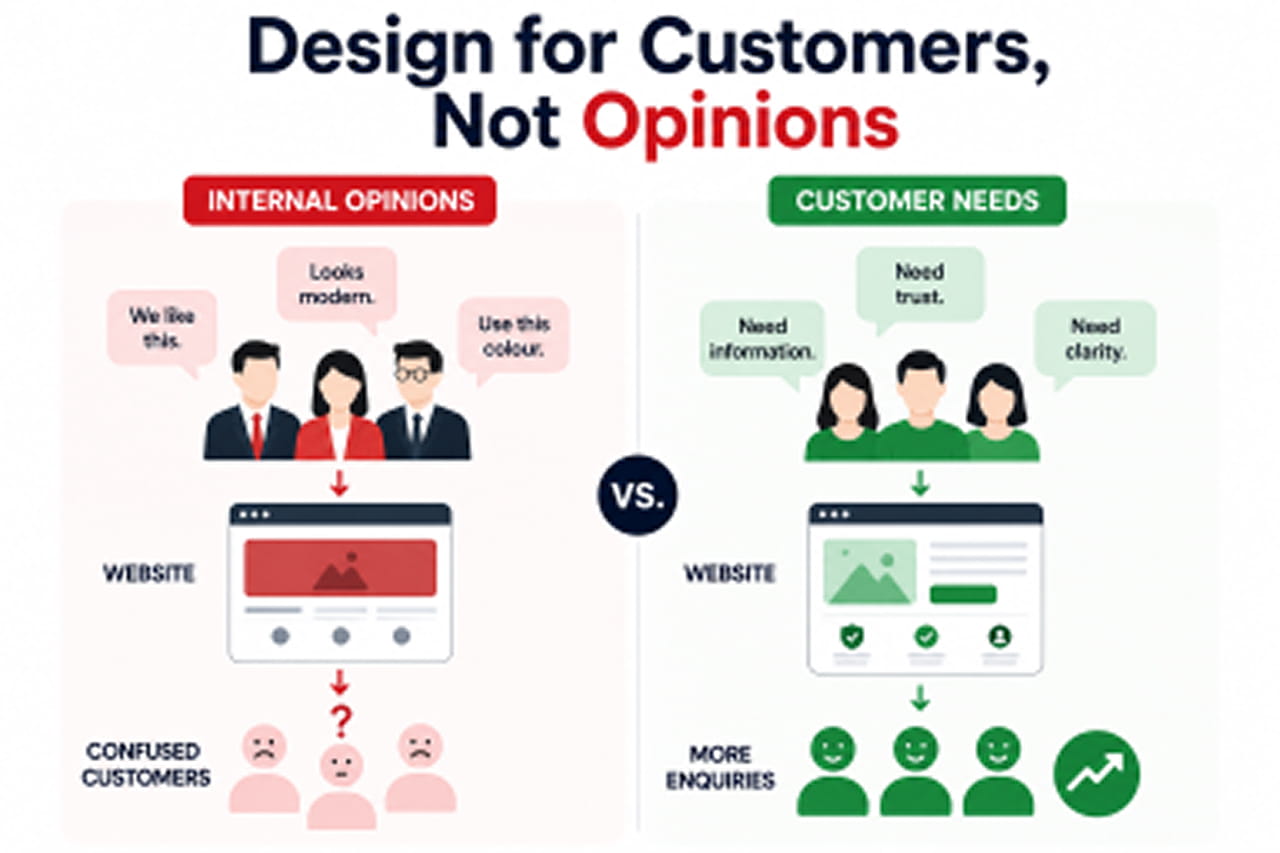
Another reason redesign projects fail is that they are frequently driven by internal opinions rather than customer needs.
Leadership teams naturally have preferences regarding layouts, colours, imagery, and branding. While these considerations matter, they do not always align with what customers actually expect from a website experience.
Customers visit websites with specific goals. They want information, reassurance, clarity, and convenience. They want to know whether a business can solve their problem and what they should do next.
When redesign decisions prioritize stakeholder preferences over customer behaviour, businesses risk creating websites that look impressive internally but fail to improve performance externally.
Research highlighted by the Baymard Institute has found that poor user experiences remain one of the leading reasons visitors abandon websites before completing desired actions. Understanding customer expectations through analytics, user testing, and behavioural data often reveals opportunities that internal discussions alone cannot identify.
Conversion Goals Are Not Clearly Defined
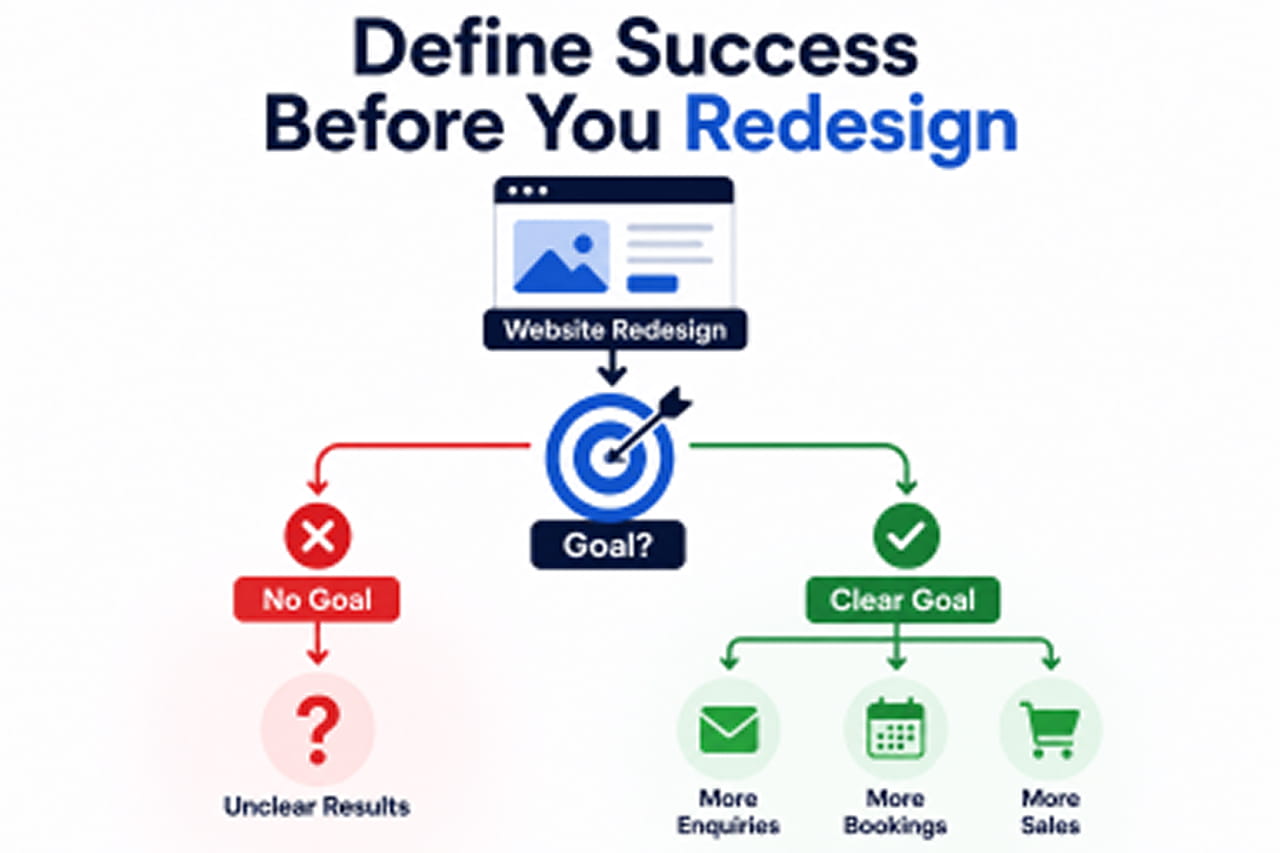
Many redesign projects begin without a clear definition of success.
Stakeholders agree that the website should be “better,” but they never establish measurable business objectives.
- Should the redesign generate more enquiries?
- Should it increase consultation bookings?
- Should it improve lead quality?
- Should it encourage more online purchases?
Without clear conversion goals, redesign decisions become subjective rather than strategic.
Successful website redesign projects align design, content, functionality, and customer journeys around specific business outcomes. Every page should support a measurable objective rather than simply contributing to the visual appearance of the website.
Businesses that fail to define success often struggle to achieve it.
Website Performance Is Treated as an Afterthought
Many redesign projects focus heavily on visual enhancements while overlooking website performance.
Unfortunately, customers evaluate the entire experience, not just the design.
A beautifully designed website that loads slowly can create frustration before visitors engage with the content. Large images, excessive animations, complex scripts, and poorly optimized functionality often contribute to slower experiences that discourage engagement.
Website performance has become increasingly important as customer expectations continue to rise. Google’s Core Web Vitals framework emphasizes loading speed, responsiveness, and visual stability as critical indicators of user experience.
Businesses that overlook these factors during a redesign may unintentionally introduce friction that affects both engagement and conversions.
Performance is no longer simply a technical concern. It is a business concern.
Content Is Updated Too Late in the Process
Website redesign discussions often revolve around layouts, colours, navigation, and branding.
Content frequently receives attention much later in the process.
This is a mistake because content plays a critical role in conversion performance.
Visitors rely on content to understand what a business offers, why it is different, and whether it can solve their problems. Strong content builds trust, addresses concerns, and guides visitors toward taking action.
A visually impressive website cannot compensate for unclear messaging or weak value propositions.
Businesses that integrate content strategy from the beginning often create more persuasive customer experiences than those that treat content as a final-stage requirement.
Trust Signals Are Overlooked
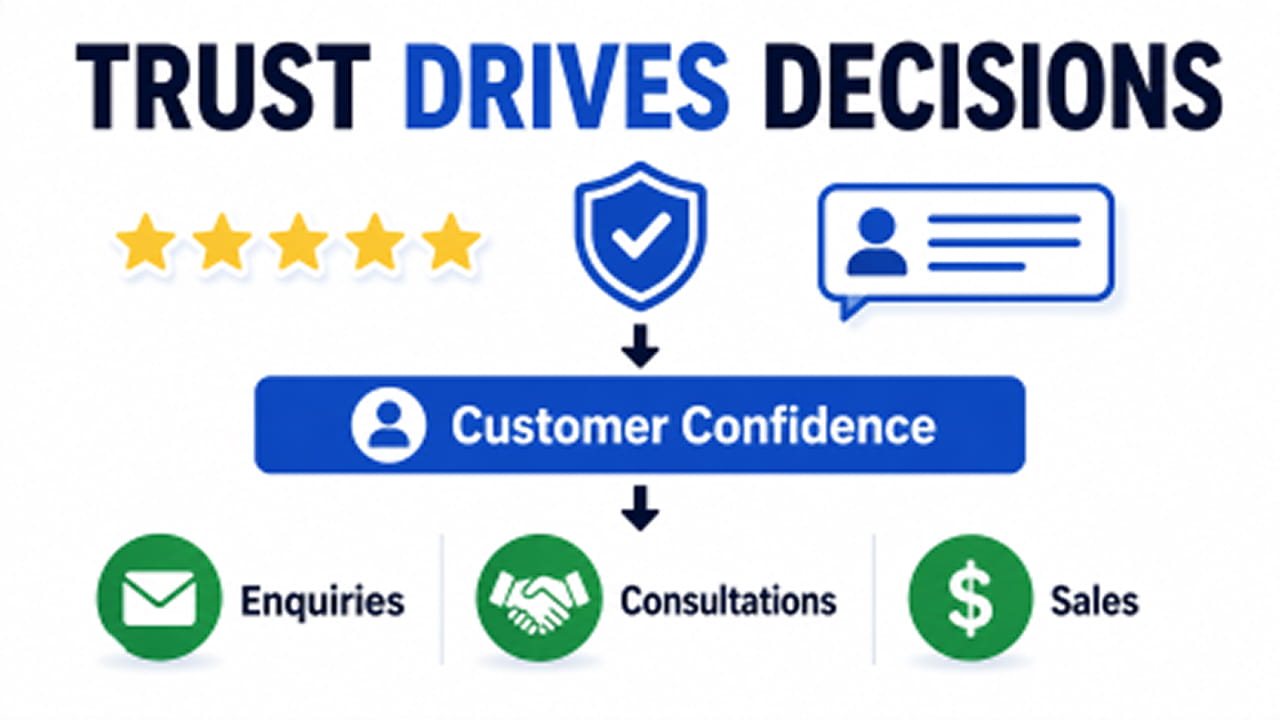
Customers rarely make decisions based on design alone.
Before contacting a business or making a purchase, they want evidence that the company can deliver results.
Testimonials, client reviews, case studies, certifications, project examples, and industry expertise all help establish credibility.
Unfortunately, redesign projects sometimes reduce or remove these trust-building elements in pursuit of cleaner aesthetics.
While the website may appear more modern, it can also become less persuasive.
Trust remains one of the most influential factors affecting conversion decisions, particularly for businesses offering professional services or high-value solutions.
The strongest redesign projects strengthen credibility rather than hiding it.
Search Visibility Is Not Considered Early Enough
A redesign should improve more than appearance and usability. It should also support visibility.
Businesses sometimes launch redesigned websites without considering the SEO implications of changing URLs, modifying content structures, removing pages, or altering internal linking strategies.
The result can be a decline in search visibility that reduces the volume of qualified traffic reaching the website.
The most successful redesign projects align website development, user experience, content strategy, and search engine optimization services from the beginning rather than treating SEO as a separate activity after launch.
This integrated approach helps preserve rankings while creating a stronger foundation for long-term growth.
Conversion Optimization Requires Ongoing Improvement
One of the biggest misconceptions about website redesigns is that launch day marks the end of the project.
In reality, launch day is often the beginning.
Customer expectations evolve. Competitors improve their websites. Search engines introduce new requirements. User behaviour changes over time.
Businesses that achieve meaningful conversion improvements understand the importance of continuous optimization.
Rather than assuming the redesign is complete, they analyse performance data, review user behaviour, test new approaches, and identify opportunities for improvement.
Research consistently shows that user experience improvements combined with ongoing optimization efforts can significantly improve conversion performance. However, these gains rarely occur automatically. They result from continuous refinement and strategic decision-making.
The highest-performing websites are not necessarily perfect at launch. They become successful because businesses continue improving them.
A Successful Website Redesign Starts with Strategy
The most effective website redesigns are not driven by trends, aesthetics, or stakeholder preferences. They are driven by strategy.
Before selecting colours, layouts, or design elements, businesses should understand why their current website is underperforming. They should identify customer pain points, evaluate conversion barriers, analyse user behaviour, and establish measurable goals.
When these insights guide the redesign process, the website becomes more than a visual upgrade.
It becomes a business asset designed to support growth. The question is not whether your website needs a redesign. The more important question is whether your redesign strategy is focused on improving conversions.
The answer often determines whether a redesign becomes a growth opportunity or simply an expensive cosmetic update.
Ready to get more value from your website? Reach out through our contact form and we’ll get back to you promptly. Whether you’re looking to improve user experience, increase conversions, strengthen search visibility, or support future growth, our team can help create a website strategy that delivers measurable business results.


 +91 8277203000
