
Google Zero: Is Search Entering the Zero-Click Era?
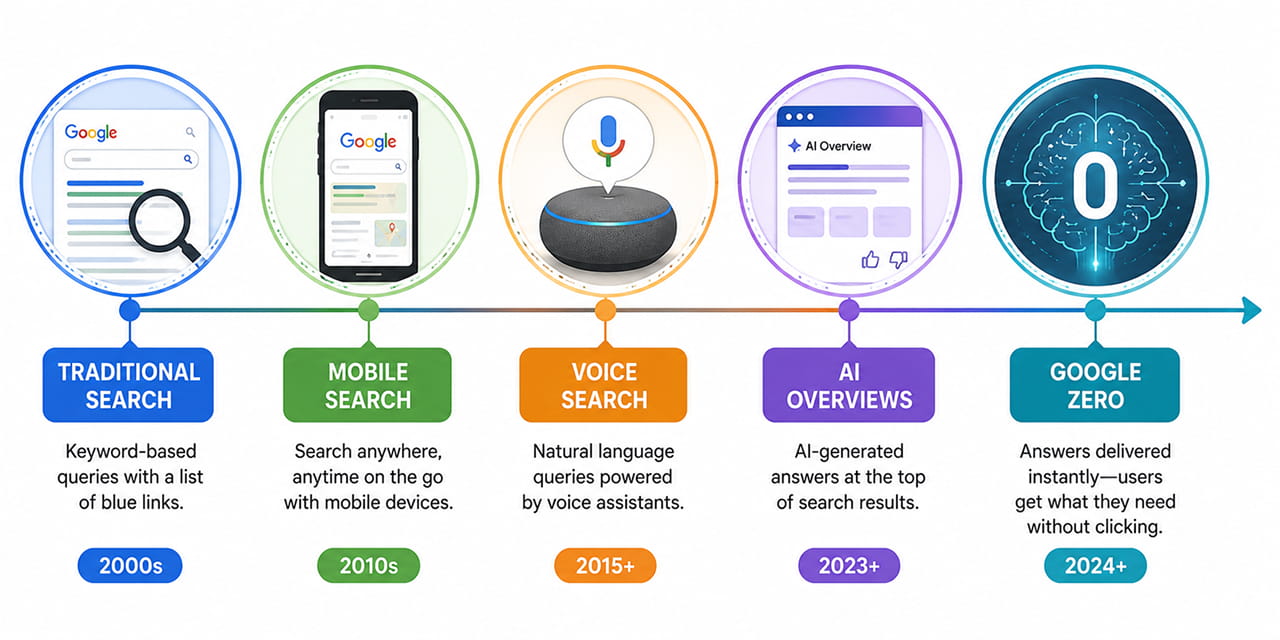
Google Zero describes the growing shift toward search experiences where users receive answers directly from search engines without visiting websites. As AI Overviews, featured snippets, and instant answers become more common, businesses must adapt their SEO strategies to remain visible in the Google Zero era.
For more than twenty years, the search economy operated on a relatively simple exchange. Businesses created content, search engines indexed it, users clicked links, and websites received traffic. Entire marketing strategies, analytics platforms, and SEO programs were built around that model.
Today, that relationship is changing.
The rapid expansion of Google AI Overviews, AI Mode, ChatGPT Search, Perplexity, and other answer-driven platforms is creating a new reality where users increasingly receive answers without visiting a website. Across the SEO industry, this shift is being described as the arrival of “Google Zero” — an environment where visibility can exist without clicks.
Unlike previous search trends, this change affects the fundamental economics of organic traffic. Businesses are beginning to ask a difficult question: what happens when search engines still use your content but fewer people visit your website?
Businesses adapting to AI-first search are increasingly focusing on both technical discoverability and long-term authority building. A strong foundation built through strategic SEO services and modern website design services can help brands improve visibility, strengthen user experience, and increase the likelihood of being surfaced across both traditional search results and AI-generated responses.
Why the Industry Is Paying Attention
Google has spent the past two years expanding AI-generated search experiences. Instead of presenting users with a list of links, search engines increasingly generate answers directly on the results page.
For users, this can be extremely convenient. A complex question that once required visiting multiple websites can now be answered within seconds.
For publishers and businesses, however, the implications are more complicated.
Many organizations are reporting situations where search visibility remains stable while traffic declines. In some cases, content is being referenced within AI-generated summaries without generating the same volume of clicks previously associated with high rankings.
This is one reason the discussion around Google Zero has accelerated. The concern is not necessarily that search traffic disappears entirely. The concern is that search behaviour is evolving faster than traditional measurement models.
The Traditional SEO Funnel Is No Longer Predictable
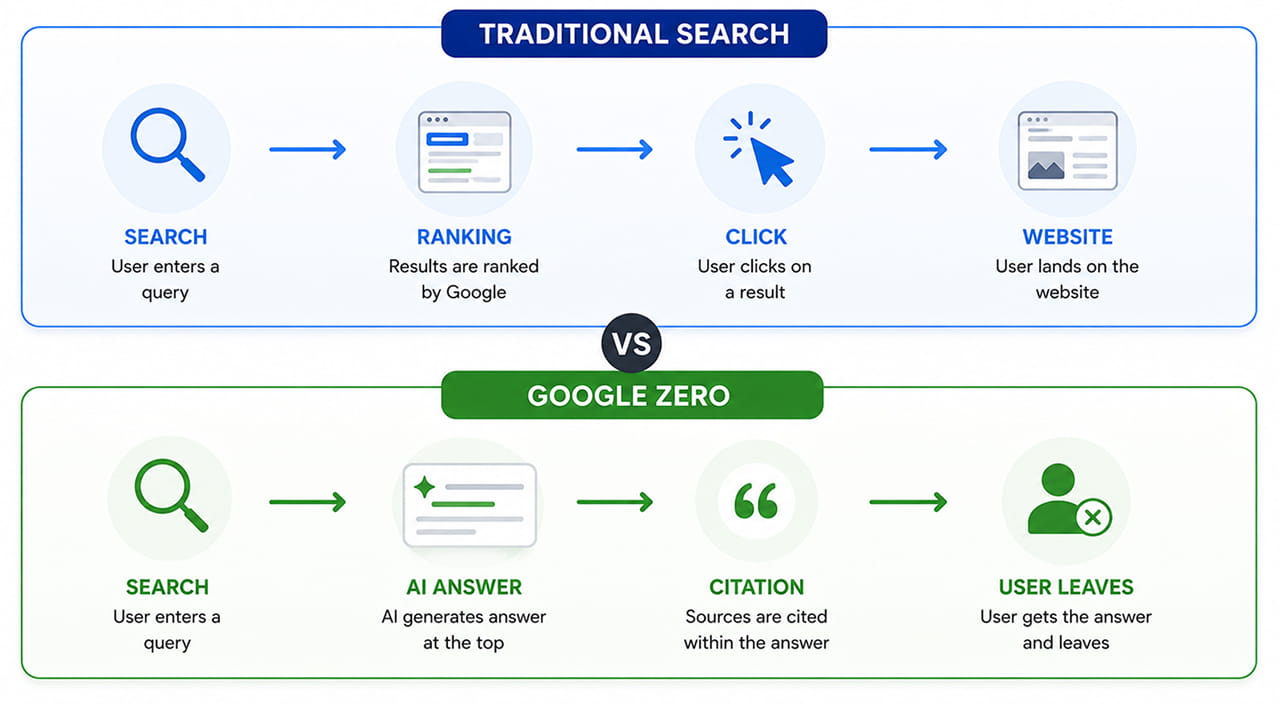
Historically, SEO success followed a relatively clear path.
A page ranked well.
Users clicked.
Traffic increased.
Conversions followed.
Today, the journey is becoming less direct.
A user may see an AI Overview, receive the information they need, and leave without clicking any result. The website still influenced the answer, but the traditional traffic signal never appears.
This creates a challenge for marketers. Rankings remain important, but rankings alone no longer tell the complete story.
The implications are significant because many reporting frameworks still focus heavily on clicks and sessions. As answer-driven search expands, businesses may need to evaluate visibility through a broader lens that includes citations, mentions, authority, and brand recognition.
AI Overviews Are Changing User Behavior
One of the most interesting aspects of this transition is how quickly user behavior appears to be adapting.
People increasingly expect search engines to provide immediate answers rather than pathways to answers. This behavioral shift mirrors changes previously seen in mobile technology, social media, and streaming platforms where convenience consistently influenced adoption.
When users receive complete summaries directly within search results, they often have less incentive to conduct additional research.
For informational queries, this may reduce the number of websites users visit during a search session. For businesses that depend heavily on informational traffic, the impact can be substantial.
At the same time, not every query is equally affected. High-intent commercial searches, product comparisons, specialized research, and complex buying decisions still frequently require deeper investigation. This suggests that Google Zero is not eliminating website visits entirely. Instead, it is changing where and when those visits occur.
Why Brand Authority Is Becoming More Valuable
One recurring theme across industry discussions is the growing importance of authority.
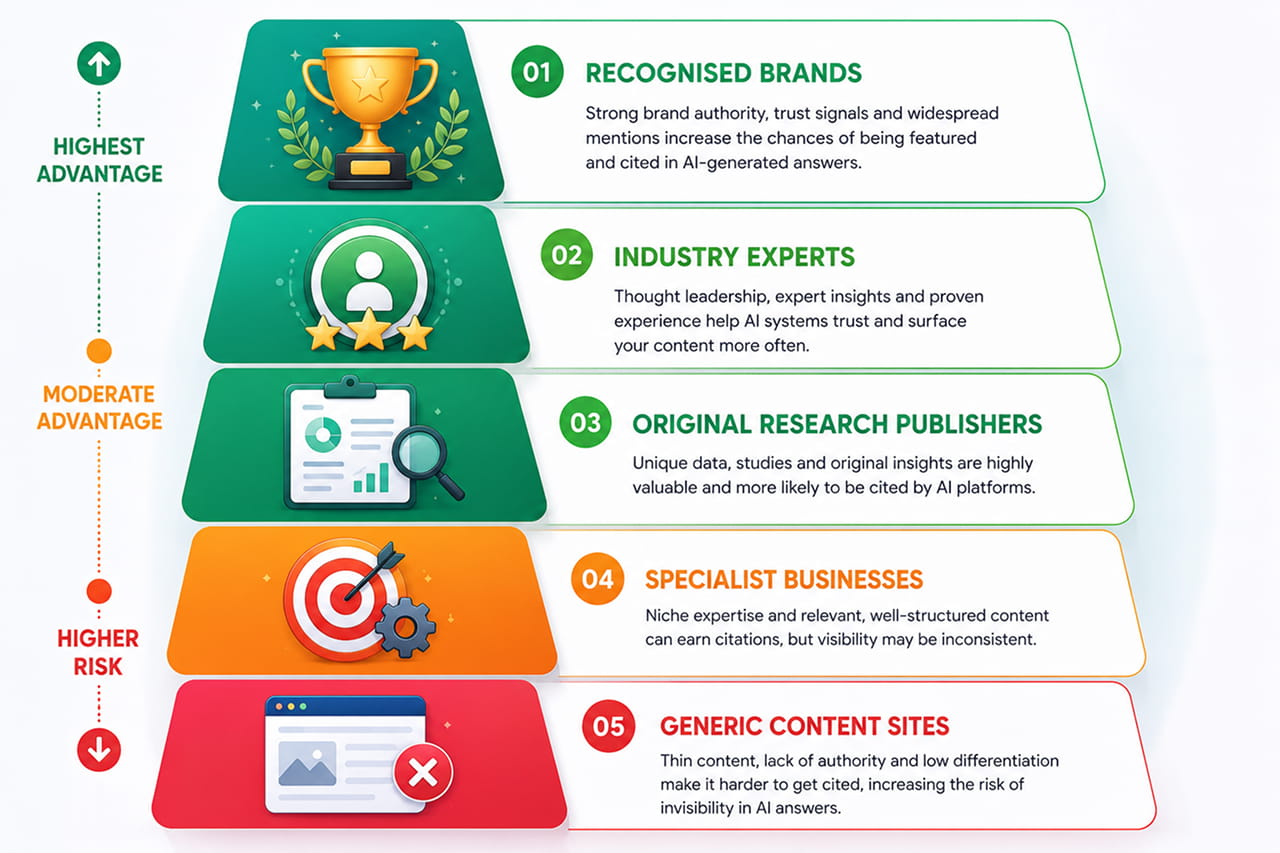
AI systems appear increasingly focused on trusted sources, recognized entities, established expertise, and credible information providers. In practical terms, this means businesses with stronger reputations may have advantages that extend beyond traditional ranking factors.
A recognized brand is more likely to be referenced, cited, and surfaced across AI-driven experiences.
This shift helps explain why many organizations are investing more heavily in thought leadership, original research, expert commentary, and long-term content strategies. The objective is no longer simply ranking for a keyword. The objective is becoming a recognized authority within a subject area.
Many of the authority and trust signals discussed throughout this article align with principles outlined in Google’s Search Quality Evaluator Guidelines, which emphasize experience, expertise, authority, and trustworthiness.
Technical SEO Still Matters—Perhaps More Than Ever
A common misconception is that AI search will reduce the importance of SEO.
The opposite may be true.
AI systems still need to understand content before they can use it. Structured information, schema markup, crawlability, internal linking, and content architecture remain essential components of discoverability.
Businesses investing in technical SEO services are increasingly focusing on how search engines interpret relationships between topics, entities, services, and information sources.
Well-structured websites provide clearer signals to both traditional search engines and AI retrieval systems. Poorly organized websites make interpretation more difficult, reducing the likelihood that content will be surfaced in AI-generated experiences.
Rather than replacing SEO, AI search may be increasing the importance of technical foundations.
The Emergence of Generative Engine Optimization
As AI search grows, a new discipline known as Generative Engine Optimization (GEO) is attracting attention across the industry.
As marketers adapt to citation-driven visibility, emerging studies on Generative Engine Optimization (GEO) suggest that content structure, authority signals, and source credibility may influence how AI systems select and reference information.
Traditional SEO focused primarily on rankings.
GEO focuses on discoverability inside AI systems.
The objective is to improve the likelihood that content will be referenced, cited, summarized, or surfaced when AI platforms generate responses.
This requires a broader strategy that combines technical optimization, content quality, topical authority, and brand credibility.
Businesses that begin adapting early may find themselves better positioned as AI-driven discovery becomes more common.
What Businesses Should Focus on Now
The most effective response to Google Zero is not panic. It is adaptation.
Businesses should continue investing in content, but the focus should shift toward depth, expertise, originality, and authority.
A few priorities stand out:
- Build comprehensive topic authority rather than isolated articles.
- Strengthen technical SEO foundations and content structure.
- Publish original insights that cannot be easily replicated.
- Improve internal linking and semantic relationships between pages.
- Monitor AI visibility alongside traditional rankings.
These actions support both current search performance and future AI discoverability.
The Future of Search May Be Citation Driven
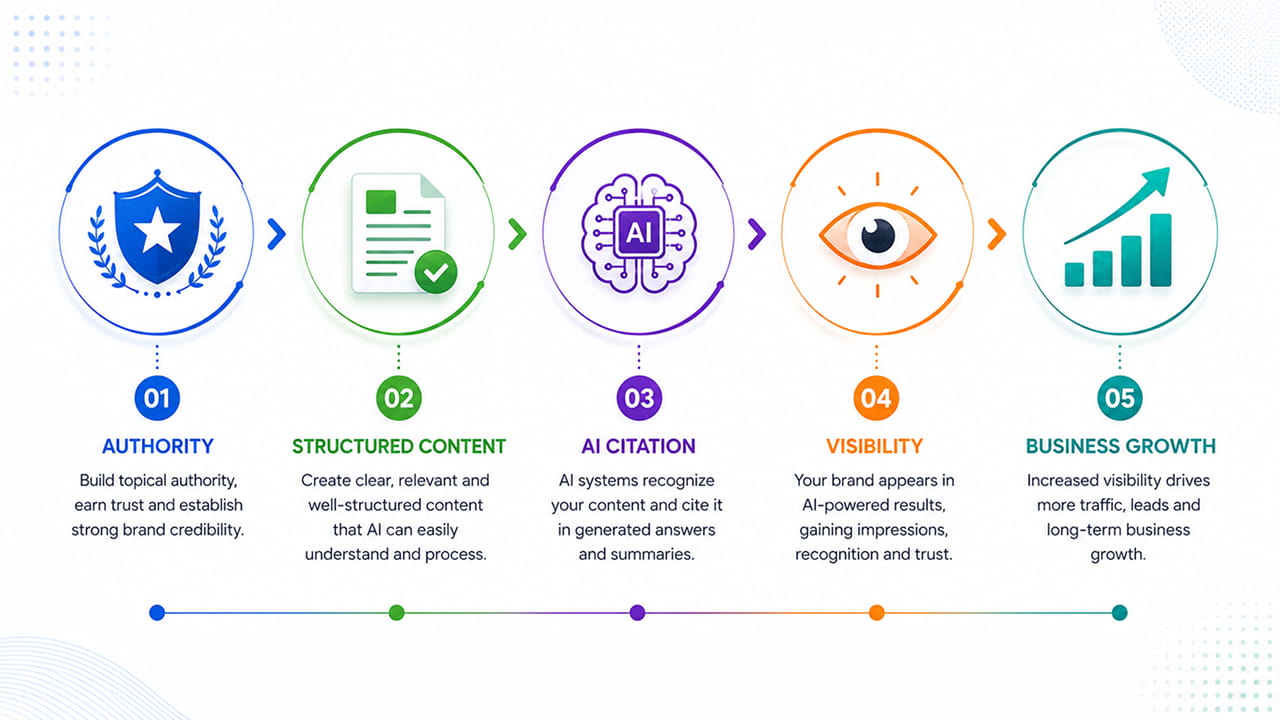
One of the most interesting possibilities is that future visibility may depend increasingly on citations rather than clicks.
In the traditional search model, traffic was the primary reward.
In an AI-first environment, visibility itself becomes valuable. Being referenced, cited, quoted, and associated with trusted information may become a critical business asset.
This does not mean traffic disappears. It means traffic becomes one outcome among several important visibility signals.
Businesses that recognize this shift early are likely to have an advantage as search continues evolving.
Key Takeaways
Google Zero is not a product, an algorithm update, or a single feature. It represents a broader transformation in how information is discovered online.
Search is moving toward an answer-first model where AI systems increasingly mediate the relationship between users and websites. As a result, businesses may need to rethink how they define SEO success.
Rankings still matter. Traffic still matters. But authority, citations, discoverability, and AI visibility are becoming equally important.
The organizations most likely to succeed will be those that build trusted brands, strengthen technical foundations, and create content designed not only for search engines but also for AI understanding.
Want to prepare your website for AI-first search and the rise of zero-click discovery? Reach out through our contact form and we’ll respond promptly. Let’s build a technical SEO and website strategy designed for long-term visibility, authority, and growth.


 +91 8277203000
